Italia Felix
Forgotten names in the history of science
1
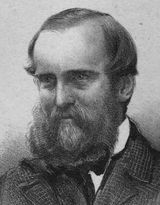
(1819 - 25 February 1855)
Christian Socialist and Chemist




Mansfield was interested in ornithology, geology and mesmerism, and worked seriously on chemistry. Faraday had discovered benzene (C
6H8) in 1825, but it was Mansfield who discovered a process to produce it with ease. His process to distill benzene was originally used in combustive oil lamps, for dissolving rubber, and in the dye industry. Nowadays it is still used to make drugs, explosives, plastics, and photographic chemicals.During one of his experiments to perfect the distillation process of benzene, a still boiled over. In an attempt to save his servant, Mansfield caught fire and died after nine days of agony.
Sources:
C. B. Mansfield, Paraguay, Brazil, and the Plate (Cambridge: Macmillan, 1856)
J.M.I. Klaver, The Apostle of the Flesh (Leiden/Boston: Brill, 2006)